About ISO 14001 Certification
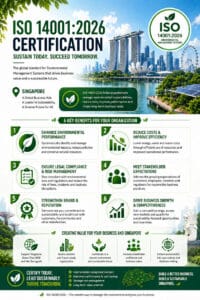
The most comprehensive certification for addressing the environmental and legal requirements of an organization’s activities is ISO 14001 certification. It provides a structured framework that enables organizations to plan, design, implement, monitor, control, and continually improve their environmental performance. Businesses can achieve ISO 14001 certification based on the ISO 14001:2015 standard while also preparing for the upcoming ISO 14001:2026 revision.
ISO 14001 certification helps organizations identify, manage, monitor, and control their environmental issues in a systematic manner. It focuses on reducing waste, optimizing the use of natural resources, and minimizing environmental impact while delivering products and services efficiently. With the expected updates in ISO 14001:2026, organizations will need to strengthen their approach toward climate-related risks and sustainability practices.
What is Environmental Management?
Environmental management refers to a systematic approach that organizations use to manage their environmental responsibilities effectively. An Environmental Management System (EMS) provides a framework for developing policies, setting objectives, and implementing processes that improve environmental performance.
Implementing an EMS through ISO 14001 certification is considered one of the most effective ways to manage environmental impact. It enables organizations to consistently monitor performance, reduce waste, and ensure compliance with environmental regulations. As organizations prepare for ISO 14001:2026, the EMS framework will become even more important in addressing climate risks and sustainability goals.
ISO 14001 certification also enhances business credibility, allowing organizations to market their products and services both domestically and internationally with recognized environmental credentials.
Who Needs ISO 14001 Certification in Singapore?
ISO 14001 certification is applicable to organizations of all sizes and industries. It is especially valuable for businesses that want to improve environmental performance and meet international standards.
- Manufacturing industries aiming to reduce emissions and waste
- Construction and infrastructure companies managing environmental risks
- IT and service organizations focusing on sustainable operations
- Exporters and global suppliers requiring international compliance
- Small and medium enterprises preparing for ISO 14001:2026
Any organization looking to enhance its environmental responsibility, improve efficiency, and gain a competitive advantage can benefit from ISO 14001 certification.
Importance of ISO 14001 Certification
ISO 14001 certification plays a crucial role in helping organizations meet environmental requirements and improve sustainability practices. It provides a globally recognized framework that ensures consistency, efficiency, and compliance.
Organizations in Singapore increasingly adopt ISO 14001:2026 certification to demonstrate their commitment to environmental protection and regulatory compliance. With the upcoming ISO 14001:2026, this certification will become even more valuable as it incorporates advanced environmental considerations such as climate change.
ISO 14001 is the only international standard that provides a comprehensive framework for environmental management applicable to all industries. It helps organizations reduce their environmental footprint while improving operational efficiency and stakeholder trust.
IAS supports organizations in Singapore by providing ISO 14001 certification services aligned with both ISO 14001:2015 and the evolving requirements of ISO 14001:2026.
ISO 14001:2026 – Key Changes Businesses Should Expect
The upcoming revision is expected to introduce several important updates that organizations must prepare for:
- Inclusion of climate change as a core environmental factor
- Increased focus on risk-based thinking and sustainability
- Enhanced requirements for monitoring and performance evaluation
- Greater alignment with international environmental policies
- Stronger emphasis on leadership accountability
These changes in ISO 14001:2026 will encourage organizations to adopt a proactive approach toward environmental management, focusing not only on compliance but also on long-term sustainability and resilience.